
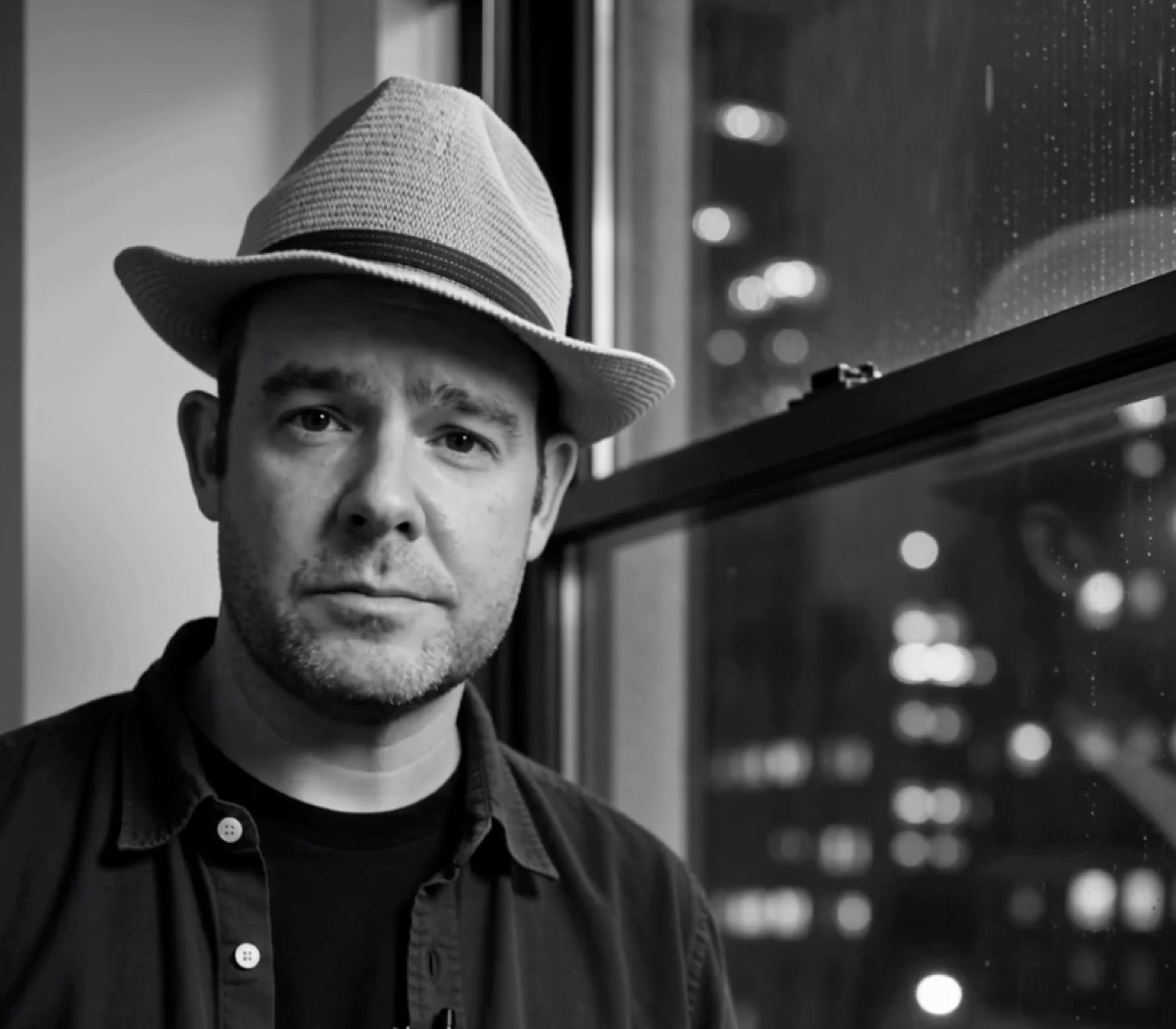
A Michael McGruther Manifesto
You can’t stop
this train.
How fan participation becomes fan belonging—and why it changes everything.
THE STORMTROOPER DESIRE · BUFFALONICKEL FILMS INC.
Daniel Craig is James Bond.
The Stormtrooper Desire
He is one of the most recognizable faces on the planet. He has played the most iconic spy in cinema history. He has walked red carpets in every city that has a red carpet. Every door in Hollywood opens for him.
And what did he want?
He wanted to put on the helmet.
In 2015, Craig appeared as an uncredited stormtrooper in Star Wars: The Force Awakens. Hidden behind the helmet, he played a brief scene opposite Daisy Ridley—and became part of the world he loved.
The story leaked. The internet loved it. And nobody was surprised, because everyone understood exactly why he did it.
He was not there for a credit. He was not there for a check. He was there because the world of Star Wars pulled at him the same way it pulls at everyone who has ever loved it. He wanted to be inside.
He was not alone.
Prince William and Prince Harry filmed appearances as stormtroopers for The Last Jedi. Michael Giacchino put on the armor for The Force Awakens. Kevin Smith lent his voice to the same universe. Ed Sheeran stepped into Game of Thrones.
One after another, famous people with every professional door open to them accepted the privilege of disappearing inside a story that was not theirs.
Think carefully about what that means.
These are not people who lack access. They do not need credentials. They do not have to wait outside any room in the entertainment industry. They have everything the industry offers.
And what they wanted was to be inside the world.
Not watching it. Not funding it. Not producing it. Inside it. Wearing the armor. Walking the corridors. Existing, even briefly, even anonymously, inside a story they loved.
That desire has a name. Call it the Stormtrooper Desire. The pull to cross the line between audience and story and become part of something larger than yourself. To stop watching and start belonging.
Every person who has ever loved a story has felt it. The kid who dressed as Luke Skywalker for Halloween. The adult who stood in line for four hours at a convention just to enter a set recreation. The lifelong fan who spent a thousand dollars on a prop replica because holding it made the world feel real in a way their regular life did not.
Daniel Craig just had the phone number to make it happen.
The rest of the world has been waiting.
For a hundred years, the entertainment industry built the glass wall taller and more beautiful while the audience pressed their faces against it and dreamed. The studios knew the desire existed. They monetized every version of near they could package. Merchandise. Conventions. Fan clubs. Behind-the-scenes documentaries. Collector’s editions.
But they never sold inside.
Because inside was the one thing that served the audience more than it served them.
The pull to belongThat changes now.
Fan Participation Becomes Fan Belonging
Stop. Read that again.
Fan participation becomes fan belonging.
Not a loyalty program. Not a subscription tier. Not a Discord server where you feel like part of a community because the algorithm told you that you were.
Belonging. Real, permanent, narrative belonging. Your identity embedded inside a living world. A character with your name, your alignment, and your fate, growing alongside the story itself.
That is what Guest Star is.
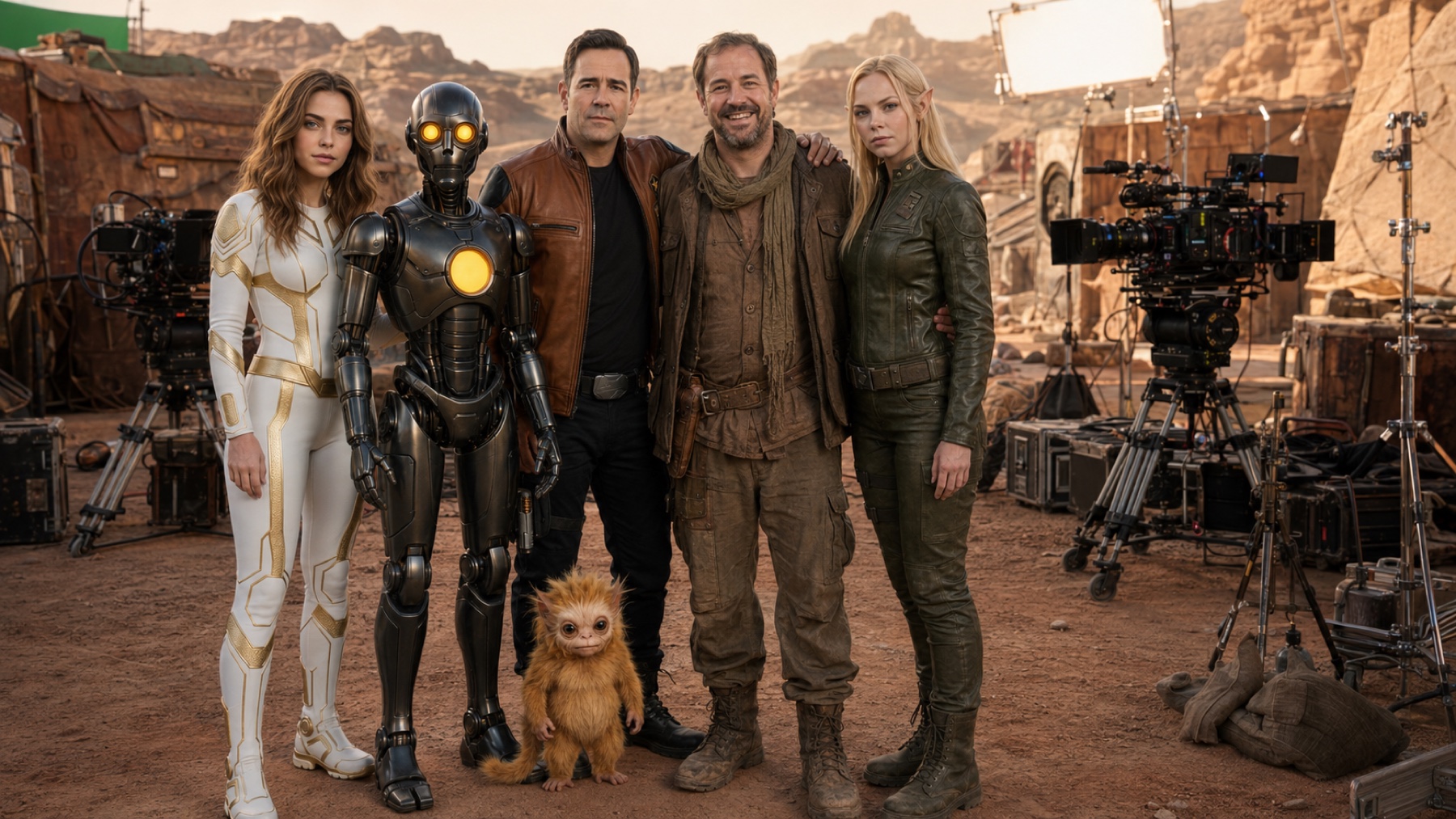
Guest Star is a web app developed by Buffalonickel Films Inc. It allows fans of the science-fiction series Long Haulers to upload a photo, select a role, choose their alignment and fate, and receive an AI-generated collectible character card with their name and identity built into the world of the show.
Not a profile picture. Not a cosmetic skin. Not a certificate of participation.
A character. In the world. With weight. With identity. With a permanence that grows as the show grows.
Here is what that looks like in practice.
A fan opens the Guest Star app. She uploads her photo. She reads through the available roles aboard the SS GRIT and chooses her alignment and fate. The app generates her collectible card. Her face. Her name. Her character identity, rendered in the visual language of Long Haulers.
She now holds something that did not exist an hour ago: a version of herself that belongs inside a science-fiction universe.
Every participant receives that identity and collectible. From there, selected characters cross another threshold and enter the series itself.
Her character joins the casting pool for the show. The casting decisions are real. The roles carry consequences. If selected, her character becomes part of the continuing story of Long Haulers.
Belonging is open to everyone. Narrative consequence is earned through casting.
That is not a feature. It is not a marketing tactic. It is a new repeatable model for the relationship between creator and audience—one that did not exist in this form before and that other sovereign creators can now build upon.
The Wall and Why It Stayed Standing
It was not always a wall.
For most of human history, storytelling was participatory. The bard at the fire did not perform at the audience. The audience was part of the event. Mystery plays, folk tales, traveling theater. The line between performer and community was porous. Stories circulated through the communities that carried them.
Then industrialization happened, and storytelling became a product.
A product requires production. Production requires capital. Capital requires control. Control requires exclusion. The audience became consumers. The story became intellectual property. The relationship became transactional.
By the mid-twentieth century, the wall was complete.
On one side: studios, networks, guilds, agents, development executives, distribution contracts, rights agreements, sequel options, and merchandise licensing deals.
On the other side: you.
You watched. You paid. You loved. And if you loved hard enough, you bought the merchandise that proved it.
The wall was never about talent. It was about control of the supply chain.
The institution could feel the Stormtrooper Desire as clearly as anyone. But every attempt to answer it encountered the same questions.
Who owns the character a fan contributes? What happens if that character becomes popular? What guild agreements are implicated? What precedent does it set?
For an institution, those questions are rational. They are also often fatal to experimentation. By the time every risk has been resolved, the original creative impulse is gone.
This is not incompetence. It is optimization. The studio system was built over a hundred years to produce controlled intellectual property generating predictable revenue. Participatory worlds produce unpredictable outcomes. Unpredictable outcomes are the enemy of institutional planning.
So the wall stayed.
Not because no one wanted to tear it down, but because the machine on one side of it could not survive the tear-down.
Answering the Stormtrooper Desire required a creator who owned the world completely, answered to no boards or committees, and had the freedom to simply say: come inside.
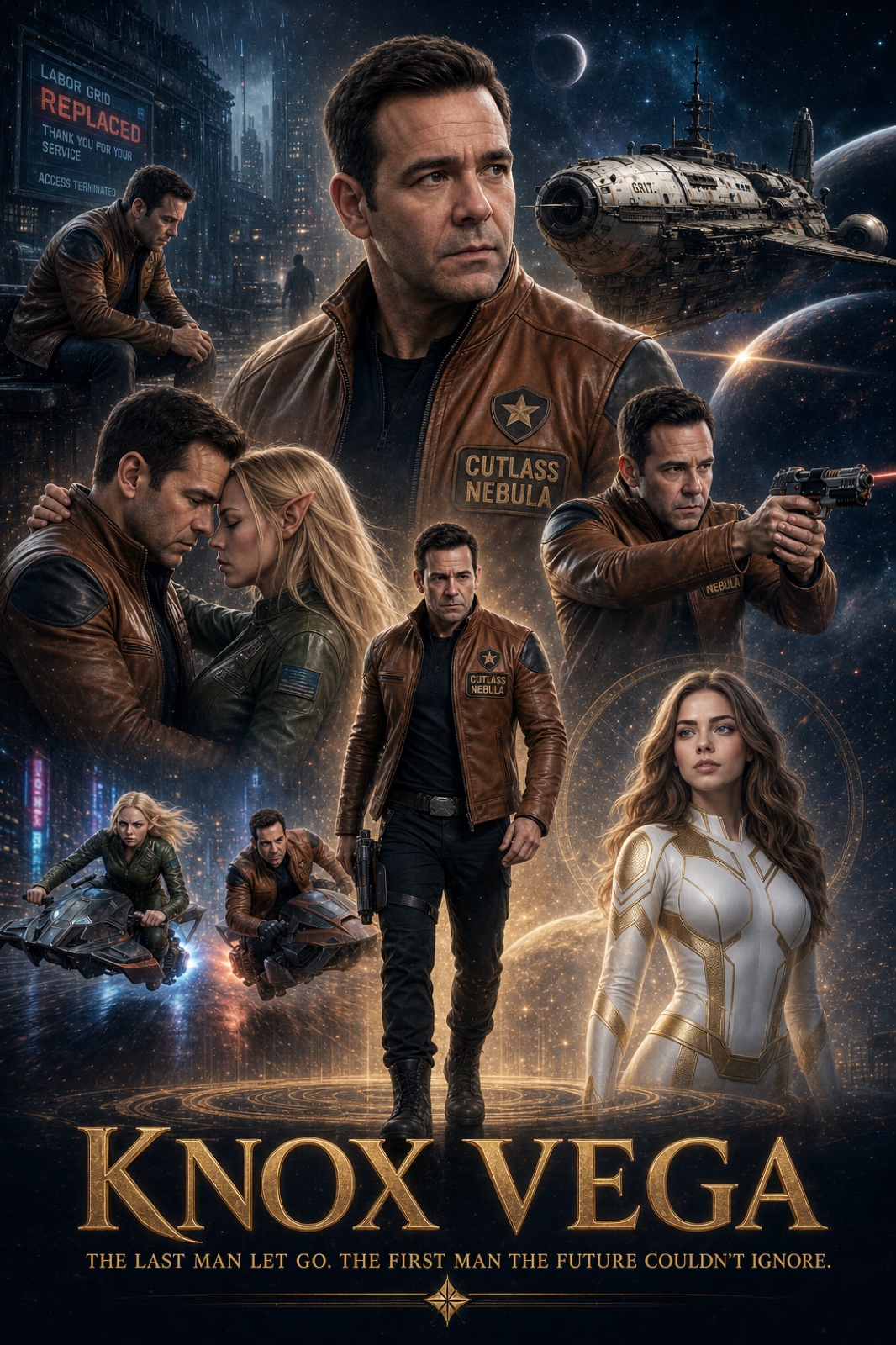 Knox Vega · Long Haulers
The Sovereign Creator
His name is Knox Vega.
He is the last human worker in a civilization transformed by automation. He works aboard the cargo ship SS GRIT, navigating deep space alongside VIRA, an AI co-pilot designed to think and feel like a living mind.
He is the protagonist of Long Haulers, a serialized science-fiction series built and produced in Chester County, Pennsylvania.
The man who built that world is Michael McGruther.
McGruther co-wrote Tigerland, directed by Joel Schumacher, which launched Colin Farrell’s career. He has sold major science-fiction screenplays to studios and spent years moving through the institutional system, watching what it does to stories and to the people who make them.
Then he built something different.
Buffalonickel Films Inc. is an AI-native micro-studio. It does not operate like a traditional production company. It uses AI-assisted workflows across writing, production, scoring, and visual development to produce cinematic science fiction at a fraction of what the institution spends.
The result is not a theory. It is a working system. A weekly series. A growing world. A model that functions.
Because McGruther owns the world completely, he can invite people inside on his own terms. No entity above him holds a claim on what those terms look like. No rights committee. No layers of institutional approval. No development note that protects the brand at the expense of the story.
Creative sovereignty is not a philosophy here. It is the technical requirement that makes Guest Star possible.
You cannot open a world on your own terms unless you control the door.
Casting and Consequence
Everyone can enter the world.
Not everyone enters it in the same role.
That is not exclusion. That is narrative.
Guest Star offers equal belonging but different narrative consequence. What makes a role meaningful is that it means something specific. A character with a name, an alignment, and a fate. A role shaped by the rules of the world rather than reduced to a generic template.
Knox Vega’s ship has a crew. The crew has roles. The roles carry weight.
A fan cast as a crew member holds a position inside a living story—one that grows episode by episode in real time. The collectible card is the artifact. The fan’s place in the world is the meaning.
This is what separates Guest Star from the fan-engagement programs that came before it.
Fan clubs gave you a membership card. Crowdfunding gave you a line in the credits. Guest Star gives you a character. A character with your name, your face, and your choices embedded in a world expanding around you.
You are not merely a consumer of Long Haulers.
Belonging with consequenceYou are a citizen of it.
What This Opens Up
Here is where it gets larger than one show.
What Buffalonickel Films Inc. built with Guest Star is a repeatable model. It demonstrates that the glass wall can come down without institutional permission. That fan participation can become genuine fan belonging. That the Stormtrooper Desire—the desire made visible every time a prince, movie star, musician, or lifelong fan stepped into a world they loved—can now be answered at scale.
The tools exist. The technology exists. The desire has always existed.
Any sovereign creator who builds a world and owns it completely can build upon the model Long Haulers is demonstrating.
The next chapter of storytelling will not be written by the studio that assembles the largest franchise. It will be written by creators who build worlds deep enough that people want to live inside them—and who are wise enough to open the door.
The economics follow the meaning.
The meaning follows the invitation.
The invitation follows the ownership.
The glass wall had a long run. But the architecture that kept it standing was never permanent. It was simply the only model anyone had tried.
This is another model.
It works. It is already working.
Designed edition · 10 pages